Every festival of light on earth makes a sensible choice and holds itself on a bright occasion. Deepavali does the opposite. It picks the one night of the month with no Moon at all, the new Moon of Kartik, and fills it with lamps. Why? Let’s find out more about the most important festival of Hindus.
Diwali is best understood not as a festival with one origin, but as a historical festival-complex: a cluster of calendrically adjacent observances that different communities have interpreted through different theological, agricultural, mercantile, royal, domestic and regional traditions. The Sanskrit name Dīpāvalī—literally a “row” or “series of lamps”—is firmly attested in premodern literature, and Purāṇic texts prescribe lamps, ritual bathing, Lakṣmī worship, Yama-related observances, Bali worship, cow worship and the brother–sister rite now called Bhai Dūj. Early-medieval sources from Kashmir and Sanskrit court literature show that lamp festivals around the Kārttika new moon were already culturally developed long before the modern period.
Five days, five rules
We covered this in our earlier Dhanteras post: Deepavali is not just a single-night festival, but a five-day festivity, with each day marked by a different tithi.
| Day | Tithi | The hour that decides it | 2026 date |
| Dhanteras | Trayodashi | Pradosh (evening) | Fri 6 Nov |
| Naraka Chaturdashi | Chaturdashi | Moonrise to sunrise | Sun 8 Nov, before sunrise |
| Lakshmi Puja | Amavasya | Pradosh (Kali Puja: Nishita) | Sun 8 Nov, evening |
| Govardhan Puja, Bali Pratipada | Shukla Pratipada | Morning | Tue 10 Nov |
| Bhai Dooj | Dwitiya | Afternoon (aparahna) | Wed 11 Nov |
Date and hour rules follow Drik Panchang and other published panchangs. The afternoon rule for Bhai Dooj is from Drik;
Texts, Myths and the Symbolism of Light in Deepavali
The Padma Purāṇa, Uttara-khaṇḍa 122, contains a developed ritual sequence around the dark fortnight and Diwali period. It prescribes the Yamadīpa on Trayodaśī, ritual bathing, illumination, Lakṣmī observances, Govardhana/cattle rites, Bali worship and Yamadvitīyā. This is particularly valuable because it shows that what modern people call “five days of Diwali” already had multiple ritual units rather than one homogeneous rite. [7]
One often-cited prescription is:
कार्तिकस्यासिते पक्षे त्रयोदश्यां तु पावके ।
यमदीपं बहिर्दद्यादपमृत्युर्विनश्यति ॥
kārtikasyāsite pakṣe trayodaśyāṃ tu pāvake |
yamadīpaṃ bahir dadyād apamṛtyur vinaśyati ||
“On Trayodaśī of Kārttika’s dark fortnight, one should place a lamp outside for Yama; it is prescribed for protection from untimely death.” — Padma Purāṇa, Uttara-khaṇḍa
The Skanda Purāṇa likewise explicitly uses the word Dīpāvalī in a ritual chapter. Its explanation joins auspicious bathing with the lamp rite:
मानवो मङ्गलस्नायी नैव लक्ष्म्या वियुज्यते ।
दीपैर्नीराजनादत्र सैषा दीपावलिः स्मृता ॥
mānavo maṅgalasnāyī naiva lakṣmyā viyujyate |
dīpair nīrājanād atra saiṣā dīpāvaliḥ smṛtā ||
“The person who performs the auspicious bath is not separated from Lakṣmī; because of the offering of lights here, this is remembered as Dīpāvalī.” — Skanda Purāṇa 2.4.9.45.
Lakṣmī: why prosperity is connected to the night of darkness
The Purāṇic festival texts themselves place Lakṣmī worship on the dark-moon observance. In the Nīlamata tradition, Lakṣmī is worshipped after sunset before lamps illuminate homes and public spaces; the Padma and Skanda traditions also integrate Lakṣmī into the Diwali cycle. Symbolically, this creates one of Diwali’s most sophisticated paradoxes: prosperity is invoked not on the brightest lunar night, but on Amāvasyā, when the Moon is visually absent. The lamp is therefore not simply decorative light. It is light deliberately introduced into darkness. In ritual logic, cleaning, ordering, opening account books, feeding, gift exchange and illumination all turn the household from an unprepared space into one considered fit for auspicious presence.
How to Perform Diwali Pūjā: A Concise Household Vidhi
The older textual sources establish a clear ritual core rather than one universal, highly elaborate paddhati: Lakṣmī Pūjā on Amāvasyā during Pradoṣa, followed by dīpa-dāna and illumination of the household. Modern Panchāṅgas may refine the exact worship interval through local sunset and muhūrta rules. Lakshmi Puja goes by Amavasya at pradosh, the early evening after sunset. This year Amavasya begins at 11:27 AM on 8 November, so it is present at pradosh that evening, and it ends at 12:31 PM on 9 November, before pradosh the next day. There is no tie, and the night is 8 November. In years when Amavasya spans two evenings the texts give tie-breaking rules, which is why calendars sometimes disagree.
The puja itself is timed to the fixed (sthira) sign Vrishabha rising, on the idea that the blessing will stay. I calculated the Vrishabha ascendant for Delhi and it runs from about 5:54 PM to 7:50 PM, which matches the window Drik Panchang publishes. Delhi sunset is at 5:28 PM, so the puja begins about half an hour after sunset.
1. Prepare during the day. Bathe, clean the home and entrance, and arrange a simple worship space for Lakṣmī. A fast or restricted diet may be observed according to family tradition, but it is not necessary to turn the rite into an elaborate austerity.
2. Begin at Pradoṣa. Make a simple saṅkalpa for Śrī Mahālakṣmī worship and dīpa-dāna. Gaṇeśa may be invoked first according to normal household pūjā practice; this is a standard preliminary rite rather than the defining act of Diwali.
3. Worship Mahālakṣmī. Offer gandha, akṣata, flowers, incense, a lamp and naivedya. A concise mantra is “ॐ श्रीं महालक्ष्म्यै नमः” (oṃ śrīṃ mahālakṣmyai namaḥ); one may alternatively recite the Śrī Sūkta. The older festival texts prescribe Lakṣmī worship but do not require one exclusive “Diwali mantra.”
4. Perform dīpa-dāna. After the worship, light lamps at the shrine, the main entrance and other safe parts of the home. This is not merely decoration: the Purāṇic and early-medieval descriptions make the offering and spreading of light one of the central ritual acts of Dīpāvalī.
5. Conclude simply. Offer ārati, namaskāra and prasāda. Kubera worship, account-book or bahi-khātā pūjā, Aṣṭalakṣmī rites and fixed numbers of lamps are meaningful later or regional practices.
For a minimal textually grounded household observance, the sequence is therefore: purification and preparation → Lakṣmī Pūjā at Pradoṣa → mantra or stuti → dīpa-dāna → ārati and prasāda. Details such as a compulsory oil, a prescribed number of wicks, or a fixed count of lamps should be identified as family or regional custom unless a specific paddhati is being followed.
One Festival, Many Diwalis: Regional and Anthropological Traditions
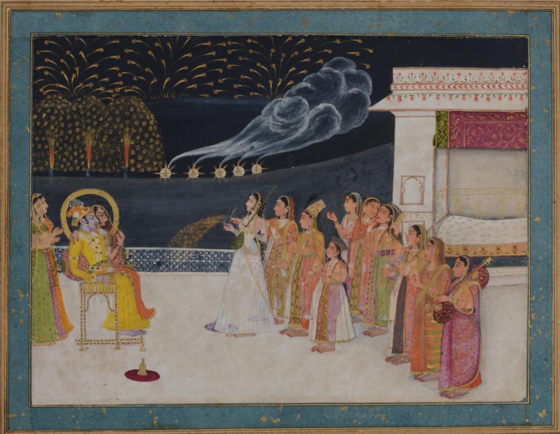
A pan-Indian “five-day Diwali” is a useful modern shorthand, but it can obscure local ritual priorities. The festival differs not merely in cuisine or decoration but in which theological event occupies the centre.
| Region or community | Major emphasis | Characteristic ritual or interpretation | Historical/ethnographic note |
| North India / Braj / Gangetic regions | Lakṣmī, Rāma, Govardhana | Lakṣmī Pūjā on Amāvasyā; Annakūṭa/Govardhana on Pratipadā; Bhai Dūj | Purāṇic Govardhana and Bali rites coexist with the later Rāma-homecoming devotional frame. |
| Gujarat and mercantile western India | Lakṣmī, account renewal, New Year | Chopḍā Pūjan, opening or sanctifying account books; New Year follows Diwali in Gujarati convention | Diwali historically became an important commercial threshold as well as a domestic rite. |
| Maharashtra / parts of western and southern India | Abhyaṅga Snāna, Naraka Caturdaśī, Bali Pratipadā | Early ritual bath, lamps, family observances, Bali-related rites | Purāṇic prescriptions strongly support the ritual-bath and Bali strands. |
| Tamil traditions | Deepavali strongly associated with Naraka Caturdaśī | Predawn oil bath, new clothes, sweets, lamps; later Kārttigai Dīpam is a distinct lamp festival | Kārttigai Dīpam is tied to the Tamil Kārttigai month/full Moon and Kṛttikā tradition and should not simply be collapsed into Diwali. |
| Bengal, Assam and parts of Odisha | Kālī Pūjā | Nocturnal worship of Kālī on Amāvasyā with lamps and ritual offerings | Eastern Śākta practice re-centres the same lunar night around the Goddess rather than Lakṣmī alone. |
| Sikh tradition | Bandi Chhor Divas | Gurdwara illumination, kīrtan, remembrance of Guru Hargobind Sahib | SGPC links the observance with Guru Hargobind’s release and arrival at Amritsar around Diwali. |
| Jain tradition | Mahāvīra Nirvāṇa | Temple worship, scripture, fasting and lamps symbolising continuation of spiritual light | Jain sources connect Dīpālikā with the nirvāṇa of Mahāvīra. |
| Bhil communities in southern Rajasthan | Household, cattle, fertility, seasonal renewal | Local deities, cattle rites, songs, dance, wall/floor art and community celebration | Ethnographic research documents Diwali as an agricultural and social festival, not merely an adopted urban Hindu form. |
| Nepal / Newar and broader Tihar traditions | Humans, animals, Lakṣmī and kinship | Days honouring crows, dogs, cattle/Lakṣmī and siblings | The festival complex illustrates the wider Himalayan transformation of the autumn lamp season into a multispecies and kinship ritual. |
Kṛṣṇa, Narakāsura and Naraka Caturdaśī
The killing of Bhaumāsura/Naraka is narrated in Śrīmad Bhāgavata Purāṇa 10.59. The chapter begins with Parīkṣit asking how Bhauma, who had imprisoned women, was killed:
श्रीराजोवाच
यथा हतो भगवता भौमो येन च ताः स्त्रियः ।
निरुद्धा एतदाचक्ष्व विक्रमं शार्ङ्गधन्वनः ॥
śrī-rājovāca
yathā hato bhagavatā bhaumo yena ca tāḥ striyaḥ |
niruddhā etad ācakṣva vikramaṃ śārṅga-dhanvanaḥ ||
“The king said: Tell me how Bhauma, who had confined those women, was slain by Bhagavān; describe the valour of the wielder of Śārṅga.” — Bhāgavata Purāṇa 10.59.1. The narrative is unquestionably Purāṇic; what requires qualification is the calendrical identification. Bhāgavata 10.59 itself does not say, “therefore celebrate Naraka Caturdaśī on the day before Diwali.” The festival association comes through later ritual tradition. This distinction preserves both the authority of the story and the integrity of the source.
Rāma’s return: sacred memory and textual precision
The association of Diwali with Rāma returning victorious to Ayodhyā is now one of the festival’s most influential North Indian narratives. Yet the Vālmīki Rāmāyaṇa deserves to be read on its own terms. Yuddha Kāṇḍa 127 has Bharata arrange Rāma’s reception:
समुच्छ्रितपताकास्तु रथ्याः पुरवरोत्तमे ।
शोभयन्तु च वेश्मानि सूर्यस्योदयं प्रति ॥
samucchrita-patākāstu rathyāḥ puravarottame |
śobhayantu ca veśmāni sūryasyodayaṃ prati ||
“Let the streets of the excellent city be lined with raised flags, and let the houses be beautified until sunrise.” — Vālmīki Rāmāyaṇa. The surrounding verses describe cleaned and sprinkled roads, flowers, flags, musicians and civic celebration. The following sarga describes flags on houses, royal procession and coronation. It does not describe millions of diyas, nor does it identify Rāma’s arrival as Dīpāvalī. Theologically, devotees are perfectly entitled to celebrate Rāma through Diwali; historically, the careful formulation is that the Diwali–Rāma homecoming connection is a later devotional identification, not an explicit statement of the extant Vālmīki text.
Kālī Pūjā on the Dīpāvalī Night
Kālī’s textual and Tantric history predates the public festival by centuries. The Devī Māhātmya (often simply called Caṇḍī in Bengal) includes a terrifying dark goddess emerging in the Goddess’s battle mythology. Later Śākta Tantras elevate Kālī far beyond a subsidiary battlefield figure: she becomes supreme Śakti, the power of time, dissolution, liberation and non-dual consciousness. Texts influential in eastern India, including the Todala Tantra, Śakti-saṅgama Tantra and Kṛṣṇānanda Āgamavāgīśa’s Tantrasāra, helped shape the ritual-theological world from which Bengali Kālī devotion emerged.
When does the annual Kālī Pūjā become visible?
The annual Kārtika-Amāvasyā festival is harder to date. Chintaharan Chakravarti pointed out that the festival is absent from several major Bengali Tantric and Smṛti digests where one might expect it if already fully institutionalised. McDermott similarly notes that clear evidence for the public festival is difficult to push much earlier than the mid-eighteenth century. Kāśīnātha Bhaṭṭācārya’s Śyāmāsaparyāvidhi (1777) is frequently cited as an early ritual witness. The best-known story of expansion centres on Rāja Kṛṣṇacandra Rāya of Nadia (1710-1783), a major patron of Sanskrit learning, Śākta culture and the poet Rāmprasād Sen. Nineteenth-century missionary William Ward reported that Kṛṣṇacandra encouraged Kālī Pūjā on a very large scale in his domain. Modern scholarship treats the exact scale of Ward’s claims cautiously, but the broader eighteenth-century association between aristocratic Nadia patronage and the spread of the festival is historically significant.
Kālī Pūjā as a Public Śākta Statement
J. Bordeaux has argued that the rise of public Kālī Pūjā in early modern Bengal should also be read against sectarian competition. Elite Smārta-Śākta patrons promoted a form of religion that remained deeply Tantric yet socially orthodox, in contrast to the strong Gauḍīya Vaiṣṇava presence of Bengal. In this reading, public Kālī Pūjā was not only devotion; it also made Śākta authority visible in public space.
This helps explain why sacrifice became historically important in some Kālī traditions. The issue is not that all Kālī worship is sacrificial, nor that sacrifice defines Tantra universally. Rather, animal sacrifice became one visible marker of certain Śākta ritual regimes and of the Goddess’s fierce, consuming aspect. Modern practice ranges from full sacrificial traditions in specific temples to completely vegetarian household and neighbourhood pūjās.
The Tantric Meaning of the Amāvasyā Night of Deepavali
The Mahānirvāṇa Tantra explicitly gives special potency to the worship of Ādyā Kālī on a new-moon night under particular calendrical conditions. This is important as evidence that Amāvasyā possessed ritual value in Kālī-oriented Tantra. At the same time, the Mahānirvāṇa Tantra is a relatively late Bengal-associated Tantra, and scholars have debated its date and historical setting.
Ritual How-To: The Most Important Elements of Bengali Kālī Pūjā
The following is a concise household/public-pūjā outline. It reflects mainstream Bengali practice and textually grounded ritual structure, not the restricted procedures of initiated Tantric sādhana.
1. Time: The central worship is performed on Kārtika Amāvasyā, traditionally at night, often reaching its ritual climax around the late-night or midnight period. The nocturnal timing is one of the major differences between Kālī Pūjā and many daytime household rites.
2. Preparation: Clean the worship space, bathe, wear clean clothing, arrange the image or picture of Dakṣiṇā Kālī/Śyāmā, and prepare lamps, flowers, incense, water, fruit and food offerings. Red hibiscus is especially characteristic in Bengali Kālī worship.
3. Preliminary worship: A formal paddhati may begin with ācamana, purification, saṅkalpa, guru remembrance and Gaṇeśa or protective preliminary rites before the Goddess is invoked. The exact sequence differs by lineage and priestly manual.
4. Invocation of Kālī: The Goddess is invoked into the image/yantra/kalasha according to the chosen paddhati. Initiated bīja-mantras should be used only within the practitioner’s lineage. For a general household reader, simple nāma-japa such as ‘Śrī Kālikāyai Namaḥ’ or devotional hymns are safer than reproducing restricted mantra sequences without context.
5. Upacāra offerings: Offer water, sandal/gandha, flowers (especially hibiscus), incense, lamp and naivedya. Bengali traditions may offer cooked rice, sweets, khichuri and other foods; specific temples and lineages may include fish, meat or sacrificial offerings, while many households are vegetarian.
6. Recitation and devotion: Recitation may include selections from Caṇḍī/Devī Māhātmya, Kālī stotras, the hundred names of Kālī, or Śyāmā-saṅgīt. The devotional element is not an optional modern addition; it is a major historical layer of Bengali Kālī religion.
7. Dīpa and night vigil: Because the worship coincides with Dīpāvalī, lamps and extensive illumination remain part of the public and domestic atmosphere. In older Tantric-oriented traditions, night vigil, mantra-japa and prolonged worship may continue until dawn.
8. Concluding worship: Conclude with ārati where appropriate to the local tradition, praṇāma and distribution of prasāda. Some specific Tantric temple traditions historically differ on ārati or homa, so universal claims should be avoided.
Why the Same Night Can Hold Lakṣmī and Kālī
At first sight, Lakṣmī and Kālī appear to represent opposite religious moods: prosperity and terror, household order and cremation-ground dissolution. Yet the Amāvasyā night can accommodate both because both are responses to uncertainty at a calendrical threshold. Lakṣmī ritual seeks auspicious order, fertility and prosperity; Kālī ritual confronts the impermanence and destructive power within which all order exists.
In that sense, Bengal’s Kālī Pūjā does not negate the wider Dīpāvalī symbolism of light. It radicalises it. The lamp is not lit because darkness is unreal; it is lit inside a darkness that Kālī herself embodies and transcends.
The Moon on the night itself
On the evening of 8 November, by my calculation for Delhi, the Moon is about 9 degrees behind the Sun and less than 1 percent lit, below the horizon at sunset and again at midnight. The new Moon itself comes at 12:32 PM on 9 November. For three days around Amavasya there is no Moon to see. The first evening crescent returns on 11 November, which is Bhai Dooj, as the Dhanteras post showed.
So the five days run from the last crescents of the old Moon to the first of the new. The lamps are the festival’s answer to a sky that has nothing to offer.
Vedic Astrology and Deepavali: what astrologers say
Let me separate the classical from the popular again. The classical Jyotisha here is muhurta. The tithi is Amavasya at pradosh. The ascendant is a fixed sign, Vrishabha for the household puja, with the Delhi window above. For the midnight puja, some traditions prefer a later fixed sign. By my calculation Simha rises in Delhi from about 12:25 AM to 2:42 AM. In classical terms, the Moon at the new Moon has no paksha bala, no strength from its phase. The festival is held at the Moon’s weakest and the Sun’s weakest together.
The sky. On Diwali evening the Sun is in Tula (Vishakha), the sign of its debilitation. The Moon and Mercury are also in Tula, in Swati. Venus is retrograde in Kanya, its sign of debilitation, and Mercury is retrograde as well, both until 14 November. Jupiter has just entered Simha (Magha), and Saturn is in Meena.
The popular view. Many astrologers link Lakshmi with Venus, Kubera with Jupiter or Mercury, and Ganesha with Mercury or Ketu. Many will also point out that Mercury, the significator of trade, is retrograde on the very night merchants open their ledgers, and that Venus is retrograde too. Tula is the scale, and the Sun and Moon both placed in it on Diwali make an attractive picture for those who like such patterns.
Economy, Environment and Public Health
Diwali today is simultaneously a sacred festival and one of India’s largest annual consumption cycles. Jewellery, garments, household goods, vehicles, electronics, sweets, decorations, flowers, travel, hospitality, logistics, gifting, puja materials and services all experience festive demand.
Diwali today is simultaneously a sacred festival and one of India’s largest annual consumption cycles. Jewellery, garments, household goods, vehicles, electronics, sweets, decorations, flowers, travel, hospitality, logistics, gifting, puja materials and services all experience festive demand. Estimates should nevertheless be labelled carefully because no single government series measures “Diwali GDP.”
| Indicator | Figure | What it actually measures | Source/qualification |
| India Diwali-season trade, 2025 | ₹6.05 lakh crore | ₹5.40 lakh crore goods + ₹65,000 crore services | CAIT nationwide survey across 60 distribution centres; trade-body estimate, not official GDP. |
| Navratri-to-Diwali festive trade forecast, 2026 | >₹7 lakh crore | Projected broader festive-period trade | CAIT forecast made before Diwali 2026; final total was not yet available as of November 5. |
| Indian fireworks industry, 2026 | ~₹6,000–7,000 crore | Annual industry value/turnover; current reports differ by methodology | Industry-source estimates reported by Business Standard and other business press. |
| Sivakasi share | ~₹5,100 crore in one 2026 estimate; other reports place production near 90% nationally | Principal manufacturing cluster | Association-derived industry figures; not a government national-account estimate. |
| Sivakasi sales linked to Diwali | >₹4,000 crore in one 2026 estimate | Roughly 80% of Sivakasi sales in that source | Sivakasi Fireworks Manufacturers Association estimate reported by Business Standard. |
| Diwali charity | No robust national Diwali-only aggregate located | Religious and charitable giving clearly occurs, but a national Diwali-specific figure would be speculative | Best treated qualitatively rather than manufacturing false precision. |
| Festival tourism | Significant but difficult to isolate nationally | Diwali contributes to travel, hospitality and pilgrimage demand, but most tourism datasets aggregate destinations/seasons | Any “Diwali tourism revenue” figure should distinguish destination-wide annual tourism from festival-only revenue. |
The economic picture extends beyond consumption. Diwali sustains artisans producing diyas, candles, textiles, sweets, flowers, rangoli materials and ritual objects; it supports transport, warehousing, catering and hospitality; and it acts as a commercial accounting threshold in several mercantile traditions. At the same time, festival economics can produce occupational risk, especially in hazardous sectors such as fireworks manufacture. Modernisation therefore cannot be evaluated only through sales volume; labour safety belongs in the same economic discussion. [51]
Air pollution: acute spike versus chronic crisis
Peer-reviewed atmospheric studies leave little doubt that fireworks can cause pronounced short-term pollution. A Delhi study reported PM₂.₅ reaching roughly sixteen times its pre-firework level during the firework event and found a very large fireworks contribution to elemental particulate matter during that period. Other multi-city research across the Indo-Gangetic Plain reports Diwali PM₂.₅ and PM₁₀ concentrations several times above health standards, with many locations entering severe or hazardous categories. Yet causation over an entire multi-day smog episode is more complex. Delhi’s autumn atmosphere also reflects agricultural residue burning, road and construction dust, transport, industry, domestic sources and meteorological trapping. Peer-reviewed work specifically examining Diwali episodes notes the interaction of fireworks with biomass-burning transport and atmospheric conditions. Thus “fireworks have no meaningful effect” is inconsistent with measurements, but “fireworks alone cause Delhi’s winter pollution” is also scientifically inadequate.
Modern Transformation and Responsible Celebration of Deepavali
Diwali today operates simultaneously as religious observance, family festival, commercial season, national cultural symbol and global diaspora marker. That expansion inevitably generates simplified origin stories.
The assumption that environmental responsibility requires stripping the festival of all pleasure in incorrect. Historically, Diwali has contained far more than combustion: diyas, worship, bathing, food, gifts, hospitality, decorating public and domestic space, family reunion, cattle ritual, charity, commerce, music and community celebration are all richly attested. A lower-emission Diwali is not necessarily a less traditional Diwali; in several respects it can place greater emphasis on practices that are demonstrably older than consumer fireworks.
xA responsible contemporary celebration can therefore proceed from evidence rather than guilt or polemic: preserve the lamp, prayer, food, hospitality and community dimensions; use only legally permitted certified fireworks where desired; respect prescribed time windows and silence zones; avoid exposing infants, elderly people, respiratory patients and animals to unnecessary smoke and noise; supervise children; treat diyas as open flames; and favour community-scale spectacle over uncontrolled prolonged bursting where possible. These recommendations align with current public-health evidence and, in Delhi-NCR, with the Supreme Court’s present regulatory approach.
Ask Fearlessly. Decide Wisely.
‘Aryaman’ Saurabh Tyagi
Jyotiṣī with specialization in Jātaka and Muhūrta | Birth Chart Analyst